Drainage
Water goes where the grade sends it, so read the grade first
How to tell where rain leaves your lot, what extension and federal guides say about grade, downspouts and swales, and what to settle before any digging.
By TerraElm Editorial Team Updated 8 min read
- Grade goal
- Away from the walls
- Slope figure
- Differs by source
- Downspout outlet (MD Ext.)
- 5 ft or 10 ft out
- 1 in. of rain, 1,200 sq ft roof
- About 748 gallons
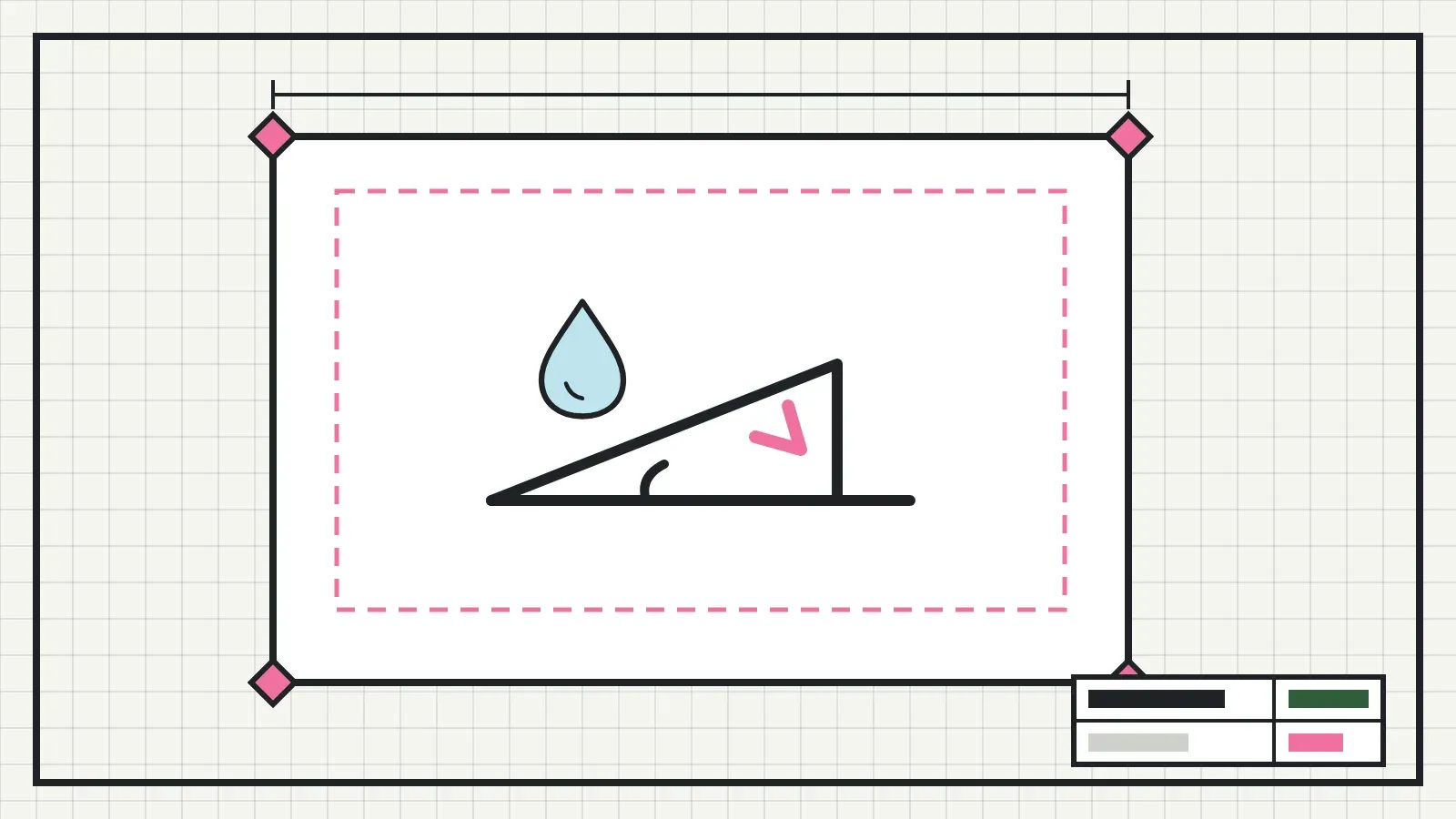
The short answer
Extension and federal guides agree on the direction: soil should slope away from the foundation, and roof water should be carried away by downspout extensions, not dumped at the wall. The numbers differ by source, from about 1% to 5%, and none of them is the code for your address. One inch of rain on a 1,200 square foot roof is about 748 gallons. Fix the roof water first, call 811 before digging, and never push the problem onto a neighbor.
Grade is a percent, and you can measure it
Grade, or slope, is the drop divided by the distance, written as a percent. A 4% grade drops 4 feet over 100 feet, or 0.4 foot (4.8 inches) over 10 feet. The formula is: drop in feet = distance in feet times the percent divided by 100.
Here is a check you can do with two stakes, a string and a line level. Put one stake at the house wall and one 10 feet out. Level the string, then measure how far the string sits above the ground at the far stake. If a source asks for 4%, the ground at the far stake should sit about 4.8 inches lower than at the wall. For 5%, it is 6 inches. Settling can reduce a slope that was right on the day it was built.
What the sources say about slope
Oklahoma State University Extension says it plainly: soils should slope outward from a house. It also warns against building soil up beyond the support the house provides. Other publishers add a number, and the numbers do not match.
| Source and place | Figure | What it applies to |
|---|---|---|
| Illinois Extension, University of Illinois | Minimum 4% slope away from the house | Final grade around foundation walls |
| Penn State Extension, Pennsylvania | About 1 to 4 percent | Grading away from building foundations on a new lawn |
| Northern Virginia Soil and Water Conservation District, Fairfax County | Ideally 5% for 10 feet | The ground around your home |
| USDA NRCS, Drainage Around Your Home (1999) | 1 foot in 100 feet, or 1%, generally adequate | Draining surface water across a yard; the brochure's only slope figure |
These are guides, not a code. A building code or a soil condition on your lot may ask for more. Ask your city or county building office what applies to new grading or to a permit, and whom to ask about stormwater. Our guide to permits for outdoor projects explains the kinds of work that trigger review.
Start at the roof: gutters and downspouts
Roof water is the largest flow you control. To size it, multiply the roof's flat footprint in square feet by the rainfall in inches, divide by 12 for cubic feet, then multiply by 7.48 gallons per cubic foot. A 1,200 square foot roof in 1 inch of rain: 1,200 times 1 divided by 12 is 100 cubic feet, and 100 times 7.48 is 748 gallons. The Fairfax County district says an average home can shed hundreds of gallons in a hard rain.
- Extend the outlet. The University of Maryland Extension says to carry roof water at least 5 feet from a home with a crawlspace and 10 feet from a home with a basement.
- Pick the landing spot. The same brief says to send it to a yard, garden or similar surface with no more than a 5% slope, which is a 6-inch rise over a 10-foot run. Test the flow with a hose first.
- Use the right pipe and a splash block. The Fairfax district suggests non-perforated corrugated plastic pipe and a splash block at the end of it.
- Clean the gutters. The same page says at least once a year, and more often with trees close to the house.
The EPA's Soak Up the Rain pages list other ways to slow roof water: disconnect or redirect downspouts, use a rain barrel, plant a rain garden or use permeable pavement. The page says it is no longer updated, so check local rules first. The Maryland brief tells you to get any permits or reviews that your local government or HOA requires. See HOA rules and your lot.
Swales and low spots
A swale is a shallow, broad channel that carries surface water along the ground. The USDA Natural Resources Conservation Service brochure suggests small diversions or swales for ponding that lasts, usually along the back or side lot lines of a residential lot. For small spots that dry quickly, it says drains may not be needed at all.
Illinois Extension lists a slope range for a bioswale or ditch in its table: at least 1%, 1.5% to 4% as desirable, and no more than 8%. Oklahoma State Extension notes that swales and similar practices need annual or periodic maintenance, so budget for upkeep, not only for the dig.
Do not move the problem next door
The NRCS brochure puts it bluntly: "Be sure not to direct water onto someone else's property!" It adds that fixes for larger flows often need several homeowners to cooperate. Illinois Extension advises you to consult an engineer or landscape architect before changing drainage, and points out that runoff from adjacent properties can complicate the picture.
Who is responsible for water that crosses a line is a legal question that varies by state. Ask your city or county stormwater or building office, and an attorney if a neighbor disagrees. Your plat and survey show recorded easements, which may limit what you can change. Ask the easement holder before you alter one. See setbacks, easements and rights of way.
Steps to read your own drainage
- Walk the lot in steady rain. Note where roof water lands, where it pools and where it leaves the lot.
- Draw arrows on your lot plan. Use the lot plan tool or a printed survey.
- Check gutters and downspouts for overflow, clogs and outlets that end at the wall.
- Measure the drop over 10 feet out from each wall with stakes, string and a line level.
- Fix the roof water first. Extensions and splash blocks are the simpler first fix.
- Get written scopes for any grading. Ask the unit each bidder uses and what it assumes about soil, access and haul-off.
Where drainage fits in the lot plan
Grading comes before pavers, beds and lawn, because it changes every elevation that follows. The reasons are in plan the order of lot projects. If the fix is a wall or terrace, read retaining walls and terraces. For a budget line, see budget the whole lot.
Questions homeowners ask
What slope should the ground have next to my house?
Sources differ. Illinois Extension gives a 4% minimum, Penn State Extension about 1 to 4 percent, and a Fairfax County district an ideal 5% for 10 feet. None is a code for your address, so ask your building office.
How far should a downspout discharge from the house?
The University of Maryland Extension says at least 5 feet from a home with a crawlspace and 10 feet from one with a basement. Check your local rules first.
Can I just regrade the yard myself?
Small fills and extensions are common DIY work, but call 811 first and keep water off a neighbor. For larger earthwork, or if runoff comes from next door, Illinois Extension suggests an engineer or landscape architect. See the 811 guide.
How many gallons does my roof shed in a rain?
Roof footprint in square feet times inches of rain, divided by 12, times 7.48. A 1,200 square foot roof sheds about 748 gallons in 1 inch of rain. The lot-math tools help with other measures.
Sources
- Illinois Extension (University of Illinois): Landscape drainage for homeowners, Good Growing, Feb. 12, 2020
- Penn State Extension: Lawn establishment
- Oklahoma State University Extension: Addressing drainage issues in the urban landscape
- University of Maryland Extension: Slow it Down and Soak it In, disconnecting and redirecting downspouts (EBR-336)
- Northern Virginia Soil and Water Conservation District, Fairfax County: Drainage problem, downspouts
- USDA NRCS: Drainage Around Your Home (September 1999), copy hosted by Harwood Heights, Illinois
- U.S. EPA: What You Can Do to Soak Up the Rain
- Common Ground Alliance: Before You Dig (811)
Checked on November 20, 2026. Slope figures, downspout rules and stormwater permits vary by city, county and state. The numbers above come from one extension or agency page each and are not a building code. The NRCS brochure is from 1999 and the EPA page says it is no longer updated. Ask your building or planning office, your county extension office and your stormwater office what applies at your address.
Next on the lot
-
Lot guide
Plan the order of lot projects
Records and 811, grading, hardscape, trees, irrigation, planting, lawn last, with a reason for each step.
-
Lot guide
Setbacks, easements and rights of way
Three limits on where you can build or fence, with a worked 2,700 sq ft buildable-area example.
-
Job
Retaining walls and terraces
Permits often start above 4 ft from the footing; drainage, terraces, easements and how walls are quoted.