Pools
A pool barrier is layers, and none of them replaces watching
What the federal guidance says about fences, gates, alarms and covers, how two local codes differ, and what to ask before you pay for a fence.
By TerraElm Editorial Team Updated 8 min read
- Fence height (CPSC)
- 48 in. or more
- Gate
- Self-closing, latching
- Latch release
- 54 in. or higher
- Local code
- Can be stricter
The short answer
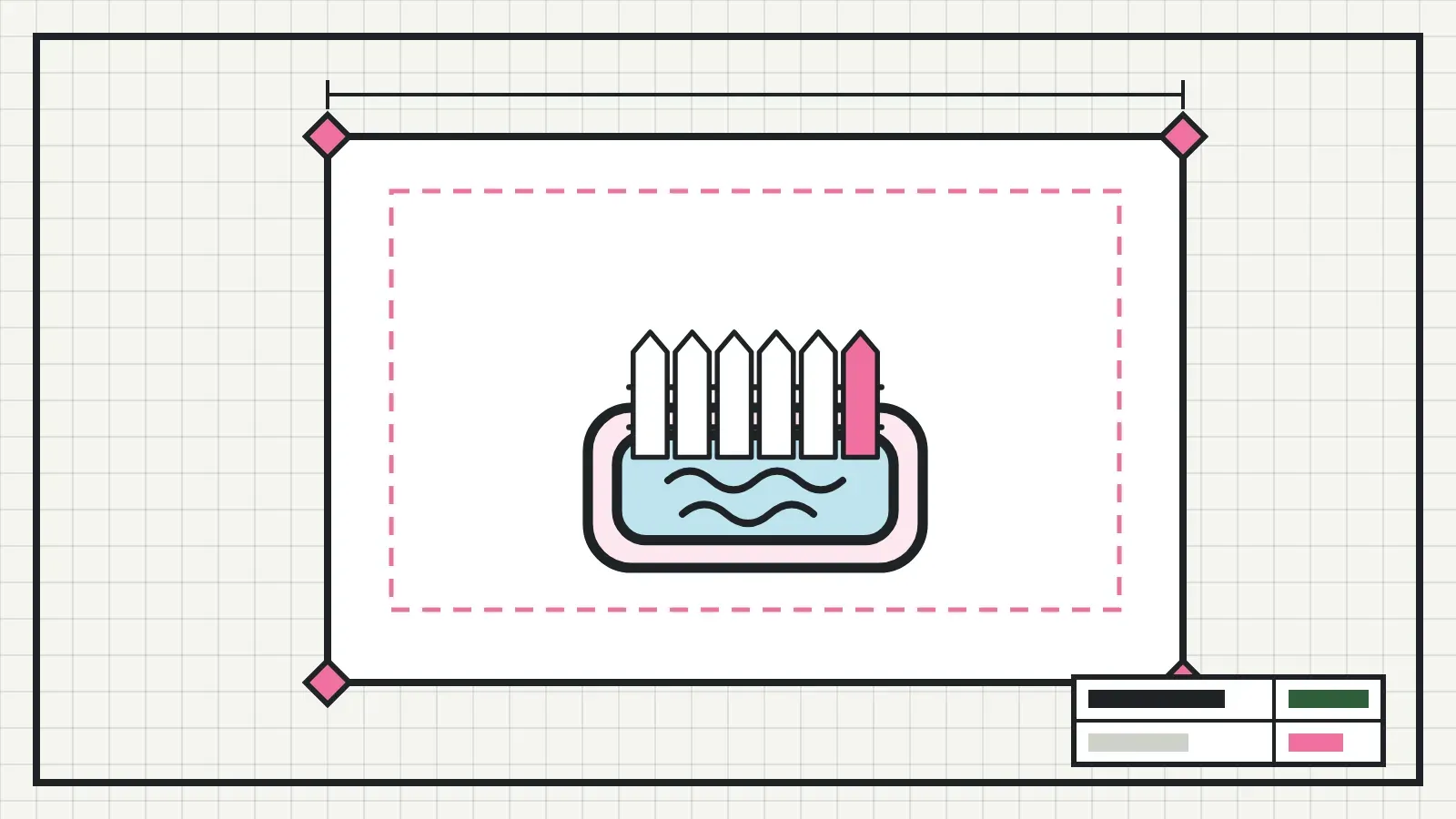
The Consumer Product Safety Commission advises a barrier at least 48 inches high on all sides of the pool, with a self-closing, self-latching gate that opens away from the water. Alarms on doors that open to the pool, covers in working order and an adult who is only watching the water add more layers. The CPSC guidelines are not mandatory, and your city or county sets the rule that applies to you.
Why a pool needs layers
The CPSC's Pool Safely program says proper fences, barriers, alarms and covers can be lifesaving devices. Its guidance also says never to leave a child unattended in or near water. Treat each device as one layer, because any single layer can fail: a gate gets propped open, an alarm is switched off, a cover is left half on. The CDC's home-pool guidance lists the same set: continuous close supervision, four-sided fencing that fully separates the pool from the house, self-closing and self-latching gates, locks or alarms on nearby windows and doors, swimming skills, life jackets and CPR.
- Barrier. A fence or wall around the pool that a young child cannot climb or squeeze through.
- Gate. The only way in, closing and latching on its own.
- Alarms. A door alarm between the house and the pool area, and window locks or alarms.
- Cover. A pool cover that is kept in working order.
- Supervision. A Water Watcher: an adult whose only task is watching children in the water.
What the federal guidance says about the barrier
The CPSC publishes Safety Barrier Guidelines for Residential Pools. The agency says plainly that they are not a CPSC standard and are not mandatory, but that some states and localities have written them into building codes. Follow your local rules in addition to the recommendations. The figures below are the guidance, not a legal requirement for your lot.
| Item | What the guidelines say |
|---|---|
| Height | At least 48 inches above the surface, measured on the pool side; 5 feet or more is preferred |
| Gap at the bottom | No more than 4 inches; 2 inches over grass or gravel |
| Openings | Vertical bars and cutouts no more than 1 3/4 inches apart; no opening should let a 4-inch sphere pass |
| Chain link | Mesh no larger than 1 1/4 inches square unless slats reduce the opening |
| Pedestrian gate | Opens outward, away from the pool; self-closing, self-latching, and lockable |
| Latch release | If lower than 54 inches from the gate bottom, on the pool side at least 3 inches below the gate top |
The CPSC also warns against anything a child could climb. Put chairs, grills, planters and stacked pavers away from the fence, and keep the gate hardware in repair. A latch that sticks gets propped open.
Alarms, house walls and windows
When a wall of your house forms part of the barrier, doors and windows that open straight to the pool become the weak point. The CPSC guidelines call for an audible alarm on doors with direct pool access that sounds within 7 seconds of opening and for at least 30 seconds, with a temporary shut-off switch mounted at least 54 inches above the threshold. Norfolk, Virginia, and Maricopa County, Arizona, repeat those details in their own rules, with a 15-second limit on the shut-off. Local codes may let a self-closing, self-latching door or gate stand in for an alarm, so ask the building office which one the inspector will accept.
Two local codes, two different numbers
Local codes turn the guidance into rules, and the numbers are not identical. Read your own city or county page, and do not rely on a sample from another place.
| Place | Barrier height and permit | Gate and alarm |
|---|---|---|
| Norfolk, Virginia | Top at least 48 inches above grade; building permit for new pools; fence inspection before use | Gate opens outward, self-closing, self-latching, lockable; alarm on doors and low windows opening to the pool |
| Maricopa County, Arizona | Top 60 inches above finished grade; barrier permit issued before the barrier goes up, the pool is plastered or it is filled | Self-closing, self-latching gate; latch at 54 inches or higher; alarm may replace a separate barrier at the house door |
Norfolk also names a powered safety cover that meets the ASTM F1346 standard as an allowed alternative to a barrier, citing the International Swimming Pool and Spa Code. The CPSC says such a cover should be kept in good working order, with its control out of children's reach. Those details vary by place, so ask whether a cover is accepted where you live. Maricopa County counts any water body deeper than 18 inches or wider than 8 feet as a pool, which can bring a large hot tub or a pond under the rule.
Above-ground pools, covers and drains
A tall above-ground wall is not automatically a barrier. The CPSC says that if you mount a barrier on top of the wall, the gap between the pool top and the barrier bottom should be no more than 4 inches, and that ladders or steps should be lockable, removable or enclosed. For any pool or spa, the Pool Safely site says never to enter water with a loose, broken or missing drain cover, because of suction entrapment. Ask the installer to name the drain cover model and its safety standard in the contract.
What a barrier job costs and includes
A pool fence is priced like any fence installation, by the linear foot, with gates and hardware as extra lines. The footage, the style, the bottom gap and spacing the code requires, and the number of gates set the price. Use the fence and deck takeoff to count it, and ask each bidder:
- Which code or guideline is the fence built to, and who confirms it with the building office?
- Does the price include a self-closing, self-latching gate and a lockable latch at the height the code requires?
- Is the permit and inspection in the price, and who schedules them?
- Does the fence connect to a house wall, and what does that wall need?
- Which fence materials fit a pool barrier? See fence materials compared.
If the pool is not built yet, put the barrier in the same plan. For the order of work, read pool types and installation, and add the fence to your job budget.
Steps to a safer pool yard
- Look up your local rule on the city or county building office page, and ask what the inspector checks.
- Enclose the pool on all sides with a barrier that separates it from the house and from the yard.
- Fit a self-closing, self-latching gate that opens away from the pool, and test it every month.
- Add door alarms and window locks where the house meets the pool area.
- Name a Water Watcher whenever anyone is in or near the water.
- Keep rescue gear and a phone by the pool, and learn CPR.
Questions homeowners ask
How tall does a pool fence have to be?
The CPSC guidelines say at least 48 inches, and some places require more: Maricopa County, Arizona, measures 60 inches. Your building office has the number that applies to your address.
Does a fence around the yard count as a pool barrier?
Sometimes, but the pool must be enclosed on all sides, the gate must self-close and self-latch, and a house wall may need an alarm. Ask the building office before you rely on an existing fence.
Do I still need to watch children if the pool has a fence?
Yes. The CPSC says barriers do not replace adult supervision, and recommends a Water Watcher whose only task is watching the water.
Is a pool cover enough?
Not by itself. The CPSC lists covers among several layers and says to keep them in working order. For cost and upkeep of covers, see pool ownership costs.
Sources
- U.S. Consumer Product Safety Commission: Safety Barrier Guidelines for Residential Pools (Pub. 362)
- U.S. Consumer Product Safety Commission: Safety Barrier Guidelines for Home Pools
- Pool Safely (CPSC): Safety tips for parents
- Centers for Disease Control and Prevention: Guidelines for Keeping Your Pool Safe and Healthy
- City of Norfolk, Virginia: Building Code Guidelines for Residential Pools (rev. May 24, 2021)
- Maricopa County, Arizona: Residential Pool and Barrier Requirements
Checked on November 20, 2026. The CPSC guidelines are recommendations, not a federal rule for your yard. Barrier height, gate hardware, alarms and permits are set by your city, county or state and may be stricter than the examples here. The CPSC document is the April 2023 edition as named in its file code. Ask your building or planning office before you build.
Next on the lot
-
Job
Pool types and installation
Pool types, permits, setbacks, 811 and the barrier, plus how to read a pool quote line by line.
-
Job
Fence installation
Layout, permits, post depth and how a fence quote is built by the linear foot.
-
Quote guide
Contractor licenses and insurance
How licensing differs by state and trade, and how to verify a certificate of insurance.