Irrigation
A sprinkler system is plumbing, a controller and local rules
What an irrigation crew installs and services, what to check before anyone trenches, and how zones, heads and visits become a quote.
By TerraElm Editorial Team Updated 8 min read
- Priced by
- Zone, head or system
- Before trenching
- Call 811
- Backflow device
- Test rules vary by utility
- Watering days
- Set by your water utility
The short answer
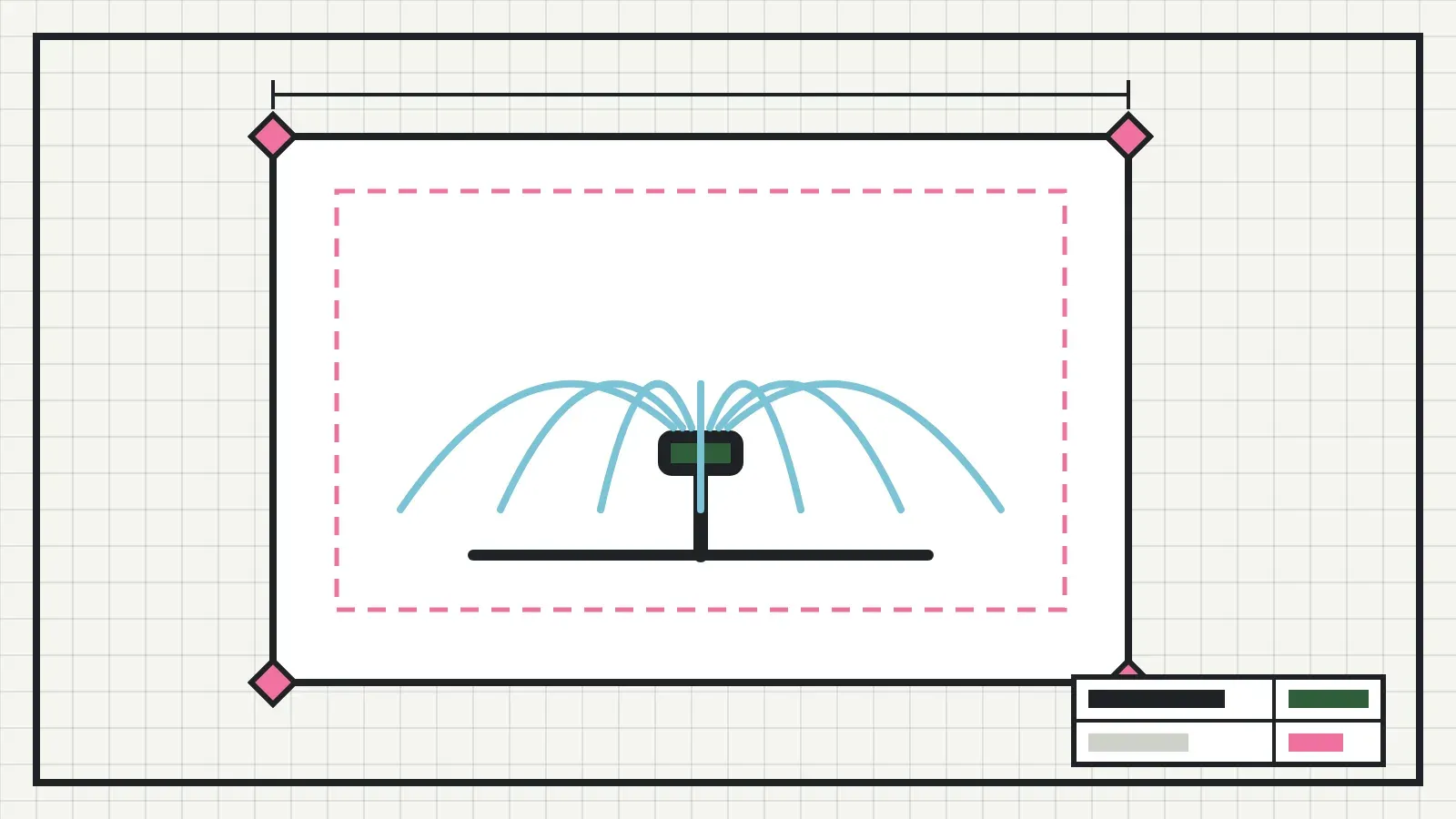
An in-ground system is a water connection with a backflow preventer, buried pipe, valves, a controller and spray or drip heads, grouped into zones. Before trenching, request 811 marks. Rules on backflow testing, contractor licensing and watering days differ by state, city and water utility, so ask yours. Quotes are priced by zone, head or system, with seasonal service as separate lines.
What an irrigation job includes
A new system starts with a design that divides the lawn and beds into zones, groups of heads that run together on one valve. The crew then trenches, lays pipe, sets valves, installs a backflow preventer on the water supply, mounts a controller and sets the heads. A test run checks coverage. Service work is separate: spring start-up, adjusting heads, repairing breaks and, where the ground freezes, a fall shut-down.
- Design. Zones, head types and spacing, and where the water enters the system.
- Installation. Trenching, pipe, valves, backflow assembly, controller and heads.
- Service. Start-up, head adjustment, leak repair, controller changes and winterizing.
- Usually not included. Sod or seed, grading, landscape restoration and any new electrical or plumbing the code requires.
Before anyone trenches
Trenches for irrigation pipe cut through the same shallow ground as buried utility lines. The Common Ground Alliance says that any digging calls for a request to your 811 center, to be made a few business days before the work, with every utility confirmed as responded and a new request for each new project. Wait times differ by state. Ask the contractor who calls, and read utility locates and the 811 color code.
Two other checks come before digging. Ask your city or county whether a permit is needed, since rules differ and Texas, for one, has inspectors who verify that permits were obtained. Read your plat or survey for easements, where you may be barred from putting permanent items: setbacks, easements and rights of way. See also permits for outdoor projects.
Backflow prevention and licensing vary by place
A backflow preventer keeps irrigation water from flowing backward into the drinking water supply. Who tests it, how often, and who may install it depend on the state and your water utility. Two examples show the range.
| Place | What the official page says | Source |
|---|---|---|
| Texas (statewide) | Anyone who sells, designs, installs, maintains, repairs or inspects an irrigation system must be licensed by the Texas Commission on Environmental Quality. A licensed backflow assembly tester should confirm the device at installation, and your water provider may require annual testing | TCEQ irrigator and cross-connection pages, modified July 2026 |
| Denver Water, Colorado | Irrigation services must have an approved backflow assembly. The customer must have it tested on installation and every year after by a certified tester, and results go to Denver Water | Denver Water backflow prevention program |
Ask your water utility what it requires and ask your state licensing board whether irrigation contractors need a license. The EPA says to confirm that a contractor is licensed and bonded, and to ask about water-efficiency training such as a WaterSense labeled certification. Its WaterSense program lists certified irrigation professionals by area. More on checking credentials: contractor licenses and insurance.
Local watering rules
A system that can water every day may be barred from doing so. Water utilities and cities set days, hours and seasons, and they change them in droughts. Two examples show how different they are.
| Utility | Rule on its page | Source |
|---|---|---|
| Denver Water, Colorado | May 1 to October 1, outdoor watering on three days a week or fewer, and not between 10 a.m. and 6 p.m. | Denver Water, summer watering rules |
| Las Vegas Valley Water District, Nevada | Winter: grass watered on one assigned day a week through February 28, never on Sunday | Las Vegas Valley Water District, current watering notice |
Program your controller to the rules for your address, and re-check each season. Your water utility's website or customer service line has the current days and hours.
Water math and why leaks matter
One inch of water on one square foot is 1/12 cubic foot, or about 0.62 gallons at 7.48 gallons per cubic foot. As an illustration, a 6,490-square-foot lawn takes 6,490 / 12 × 7.48, or about 4,050 gallons, for each inch applied. The numbers are an example, not your lot, and the area comes from your own measurements; the lot plan tool helps.
The EPA says a single broken or missing sprinkler head can waste as much as 25,000 gallons over a six-month irrigation season. It adds that homes with automatic timers often use more outdoor water, frequently because of improper scheduling, and that drip and other microirrigation uses 20 to 50 percent less water than conventional spray systems. Weather-based and soil-moisture controllers adjust to conditions, and a seasonal adjustment to the schedule matters on any controller.
How irrigation work is priced
Zones
More zones means more valves, wire and pipe. Ask how the designer chose the zone count for your lot and water pressure.
Heads and coverage
Spray, rotor and drip each have their own cost and water use. Confirm the head count and where they go.
Backflow and meter work
The preventer, its testing and any plumbing at the meter are often separate lines. Ask what your utility requires.
Service visits
Start-up, winterizing and repairs are priced per visit or per part. Ask whether a seasonal plan includes parts.
Request the same scope from each bidder: area, zones, heads, controller type and backflow work. We publish no price, because it depends on lot size, soil, pipe type and your market. For more on reading line items, see how outdoor quotes are built.
Questions for the bidder
- What is your state license number, and who is on site while the crew works?
- How many zones and heads, and how did you design for my water pressure?
- Who calls 811, who applies for the permit and who arranges the backflow test?
- What controller will you install, and can I change the schedule myself?
- What does the warranty cover, for how long, and who repairs a break after a freeze?
- Is start-up and winterizing in the price, or sold as a separate service?
DIY, service visits and timing
Fixing a broken head or swapping a controller is a reasonable DIY job once you turn off the water and know where the lines run. Installing a whole system means trenching, connecting to the water supply and fitting a backflow device, and in some states those tasks need a licensed person, so check before you start. Hire a licensed professional for the supply connection and backflow work if your state or utility requires it.
Plan the seasonal visits. Spring start-up checks heads, valves and the controller before the first watering, and in freezing climates a fall shut-down drains the lines. Link the visits to the season lists: spring restart and fall closeout. New turf also depends on water, so read aeration, overseeding and sod before you time the work.
Questions homeowners ask
Do I need a license to install a sprinkler system?
It depends on the state. In Texas, the TCEQ requires a license to sell, design, install, maintain, repair or inspect an irrigation system. Check your state licensing board for the rule where you live.
Does my sprinkler need a backflow preventer?
Usually, and utilities set the testing rules. Denver Water requires an approved assembly on irrigation services, tested on installation and annually. Ask your own water utility.
Do I have to call 811 for a sprinkler line?
Yes. The Common Ground Alliance says any digging needs a request to 811 a few business days ahead. See the 811 guide.
How much water can a leak waste?
The EPA says one broken or missing sprinkler head can waste as much as 25,000 gallons over a six-month irrigation season.
Sources
- Common Ground Alliance: Before You Dig (811)
- Texas Commission on Environmental Quality: Landscape Irrigator licensing (page modified July 2, 2026)
- Texas Commission on Environmental Quality: Cross-Connection Control and Backflow Prevention (page modified July 23, 2026)
- Denver Water: Backflow prevention program
- Denver Water: Summer watering rules
- Las Vegas Valley Water District: Watering restrictions notice
- U.S. EPA WaterSense: Irrigation professionals (updated March 11, 2026)
- U.S. EPA WaterSense: Labeled irrigation products, facts and outdoor tips (fact sheet posted 2021)
Checked on November 20, 2026. Backflow testing, licensing, permits and watering days vary by state, city and water utility, and watering rules change with drought and season. The Texas, Denver and Las Vegas rules are examples, not a rule for your address. The Las Vegas notice was the winter rule on the day it was checked. Ask your water utility and your state licensing board.
Next on the lot
-
Lot guide
Utility locates and the 811 color code
How to request 811 marks, the eight APWA colors, and notice rules in three states.
-
Job
Aeration, overseeding and sod
Core aeration every 2 to 4 years, fall seeding, sod on a pallet: timing and how each is priced.
-
Quote guide
Contractor licenses and insurance
How licensing differs by state and trade, and how to verify a certificate of insurance.